

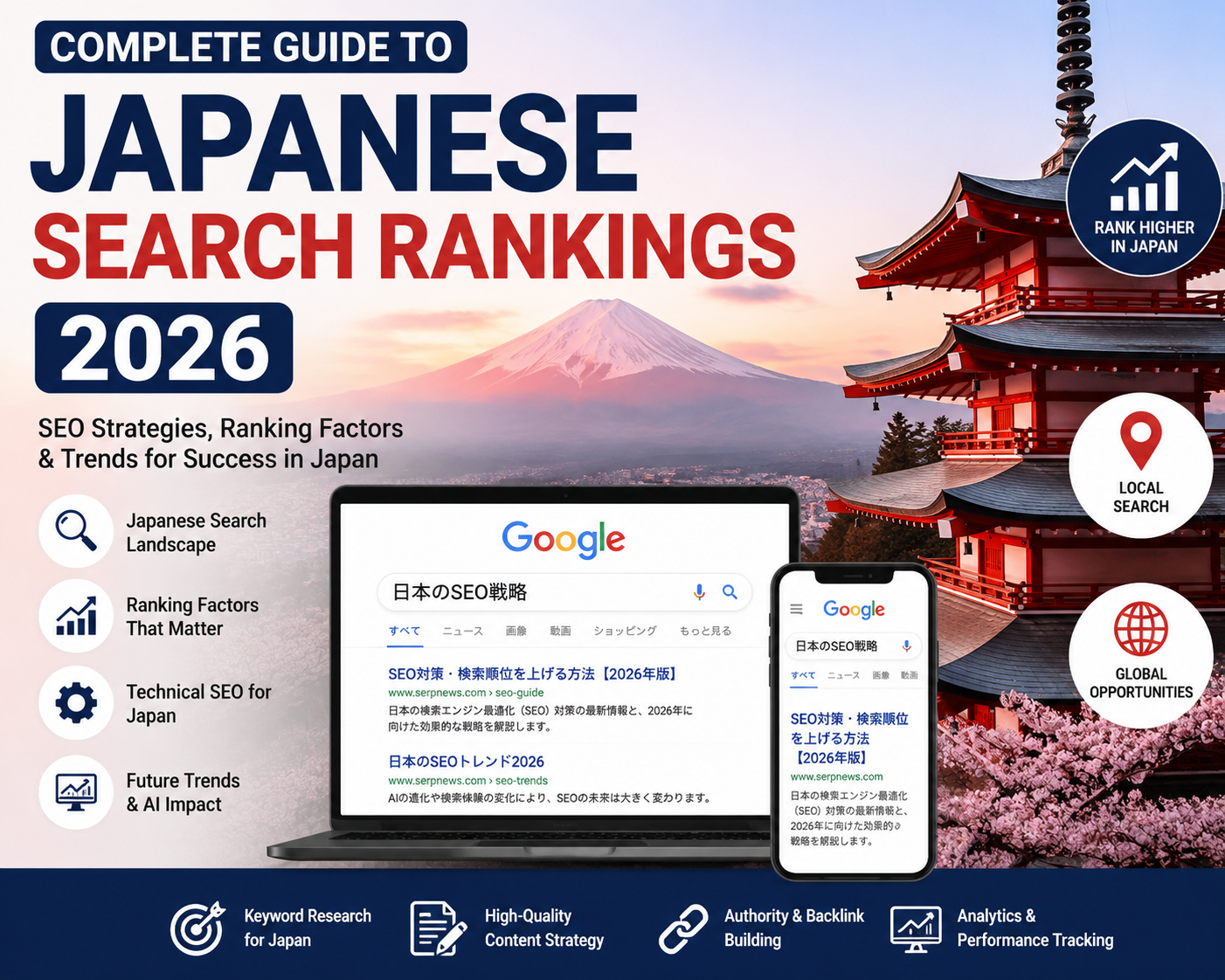
The search industry in Japan is entering a new phase where traditional rankings, artificial intelligence, user experience, and brand authority are becoming increasingly connected. For businesses, publishers, and SEO professionals, understanding SERP Japan is no longer just about checking keyword positions. It is about understanding how Japanese users discover information, how Google evaluates content, and what signals determine visibility in one of the world’s most competitive digital markets.
Search Engine Results Pages, commonly known as SERPs, have evolved far beyond the old model of showing ten blue links. Modern search results now include featured snippets, news results, videos, local business listings, product information, AI-generated answers, and personalized results based on user intent.
The Japanese search market has its own unique characteristics. Language complexity, cultural expectations, local competition, and high-quality content standards make Japan different from many other regions. A website that performs well in the United States or Europe may not achieve the same results in Japan without proper localization.
For publishers like SERP News, covering search developments, Google updates, and digital marketing changes requires understanding these differences. A strong SEO strategy for Japan requires more than translation. It requires expertise, trustworthy information, technical optimization, and content created specifically for Japanese audiences.
This complete guide explains what SERP Japan means, how Japanese search results work, which ranking factors matter most, how AI is changing search visibility, and what businesses should do to improve their presence in Japanese search.
What Is SERP Japan and Why Does It Matter?
SERP Japan refers to the search engine results pages displayed when users search from Japan or perform Japanese-language searches. These pages show different results depending on search intent, location, language, device, and user behavior.
For example, someone searching for “best smartphone” in Japan may not want the same information as someone searching that phrase in another country. Japanese users may expect:
- Local pricing information
- Japanese reviews
- Availability from Japanese retailers
- Detailed specifications
- Customer experiences
- Comparison information
Google analyzes many different signals before deciding which pages appear in search results. These include content relevance, website quality, technical performance, authority signals, and user satisfaction.
Understanding SERP Japan is important because ranking in Japan requires adapting to the local search environment rather than applying a global SEO strategy without modification.
Why Japanese Search Requires a Different Approach
Many international companies make one common mistake: they translate their existing website into Japanese and expect rankings to improve.
However, translation alone does not create successful Japanese SEO.
Japanese audiences often expect:
- Clear explanations
- Professional writing
- Strong credibility signals
- Detailed product information
- Local examples
- Reliable sources
A translated article may technically contain correct information, but if it does not match Japanese search behavior, Google may consider another locally relevant page more useful.
For example, an English article about Japanese hotels may focus on general travel recommendations. A Japanese search result may prioritize transportation details, neighborhood safety, seasonal travel information, and local customer reviews.
This difference between language and search intent is one of the biggest reasons companies struggle with SERP Japan.
How Does Google Search Work in Japan?
Google uses the same general search principles worldwide, but results are influenced by regional factors. In Japan, Google evaluates content based on relevance, quality, trust, and usefulness for Japanese users.
Google has consistently emphasized creating helpful content designed for people rather than content created only to manipulate rankings. This principle is especially important in competitive markets like Japan.
The Role of Search Intent in Japanese Rankings
Search intent means understanding why someone performs a search.
A keyword alone does not explain what a user wants.
For example:
“VPN Japan”
could mean:
- A person wants a VPN service while traveling
- A company wants Japanese VPN servers
- A user wants privacy information
- Someone wants to compare VPN providers
A successful page must answer the exact need behind the query.
Japanese users often use very specific searches because they prefer detailed information before making decisions.
Examples:
Broad keyword:
“camera”
More specific Japanese-style intent:
“best mirrorless camera for beginners in Japan”
The second search gives much clearer information about what the user needs.
How Google Evaluates Japanese Content
Google considers multiple factors when ranking pages in Japan.
Important signals include:
Content Accuracy
Japanese users often research carefully before trusting information.
Articles should include:
- Verified facts
- Updated information
- Clear explanations
- Reliable references
Content Depth
Short pages often struggle against detailed competitors.
A strong article about Japanese SEO should explain:
- Search behavior
- Ranking factors
- Real examples
- Common mistakes
- Practical solutions
Website Trust
Trust signals are extremely important.
Websites should provide:
- Author information
- About page
- Contact details
- Editorial standards
- Privacy policy
These elements support EEAT principles:
- Experience
- Expertise
- Authoritativeness
- Trustworthiness
Why Is SERP Japan Different From Other Search Markets?
Japan is one of the most advanced internet markets in the world. Users have high expectations regarding information quality, website reliability, and online experiences.
Language Complexity and Search Behavior
Japanese is a unique language environment because it uses multiple writing systems:
- Kanji
- Hiragana
- Katakana
The same topic can have different search variations depending on how users phrase queries.
For international SEO teams, direct keyword translation can create inaccurate targeting.
For example:
An English marketer may translate:
“cheap hotels Tokyo”
into Japanese literally.
However, Japanese users may search using different phrases related to:
- Budget accommodation
- Business hotels
- Location convenience
- Train access
- Specific neighborhoods
Effective keyword research must analyze actual Japanese search behavior.
Google Trends is commonly used by marketers and publishers to study search interest patterns by region and topic.
Strong Local Competition
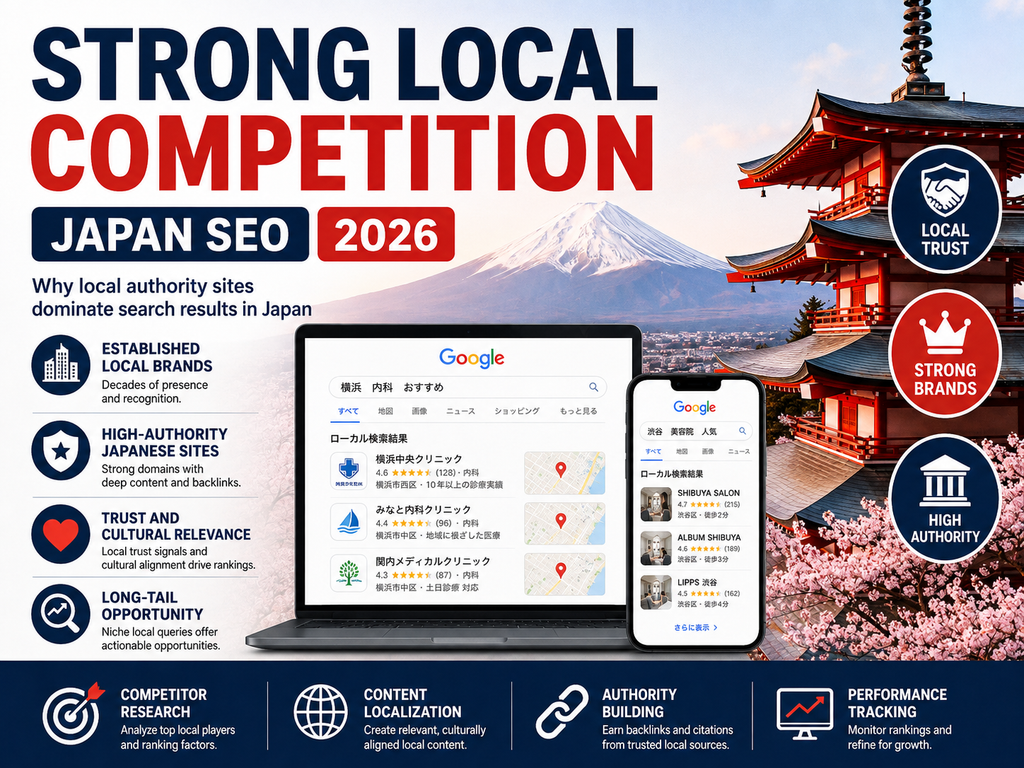
Japanese search results often contain websites with years of authority.
Many industries have established Japanese websites competing for visibility:
- News
- Ecommerce
- Travel
- Finance
- Technology
- Education
A new website entering Japan should avoid targeting only extremely competitive keywords.
A smarter approach is:
- Identify specific user problems
- Create detailed solutions
- Build authority gradually
- Earn relevant mentions
For example, instead of targeting:
“SEO Japan”
a new publisher may first create content around:
“Japanese Google algorithm updates”
or
“How businesses optimize websites for Japanese users”
Google Ranking Factors Affecting SERP Japan
Ranking successfully in SERP Japan requires balancing content, technology, and authority.
1. High-Quality Localized Content
Localization means adapting content for Japanese users instead of simply translating words.
A localized article should consider:
- Cultural references
- Local examples
- User expectations
- Japanese terminology
- Regional information
For example, an article about online shopping in Japan should mention Japanese platforms, payment preferences, delivery expectations, and customer behavior.
2. Mobile Experience
Japan has a highly connected mobile audience.
A website must provide:
- Fast loading pages
- Responsive design
- Easy navigation
- Clear fonts
- Simple layouts
Poor mobile experience can reduce user engagement and negatively affect visibility.
3. Technical SEO
Technical SEO creates the foundation for search visibility.
Important elements include:
- Clean URL structure
- Proper indexing
- XML sitemap
- Structured data
- Fast performance
- Secure HTTPS connection
For a website like SERP News, technical organization is especially important because search news websites publish frequently and need efficient crawling.
Related internal resource suggestion:
Internal Link: Learn more about Google SEO updates and search changes through our Google Algorithm Updates section.
How AI Search Is Changing SERP Japan in 2026
Artificial intelligence is changing how people discover information online. Traditional search results focused mainly on website rankings, but modern search experiences are becoming more conversational and focused on direct answers. For businesses and publishers targeting SERP Japan, understanding AI-driven search changes is becoming an important part of long-term SEO planning.
Google’s AI-powered search features are designed to understand complex questions and provide users with more complete answers. This means websites need to create content that demonstrates expertise, provides accurate information, and explains topics in a way that both users and search systems can understand.
For SERP News, this shift creates an opportunity because search-focused publishers can build authority by covering algorithm updates, AI developments, SEO research, and digital marketing changes with original analysis.
AI Overviews and Their Impact on Japanese Search
AI-generated search summaries may change how users interact with search results. Instead of clicking multiple websites to collect information, users may receive summarized answers with supporting sources.
This does not mean traditional SEO is disappearing. Instead, it means websites need to become stronger sources of information.
Content that performs well in AI-driven search usually includes:
- Clear explanations
- Original insights
- Expert opinions
- Reliable references
- Well-structured information
For example, an article about Google algorithm updates in Japan should not only explain what changed. It should also discuss possible impacts, examples, and practical recommendations.
This type of content provides more value than a short summary copied from other sources.
Preparing Content for AI Search Visibility
Websites targeting SERP Japan should focus on creating content that answers real questions.
A strong article structure includes:
- Clear introduction
- Direct answers to common questions
- Detailed explanations
- Examples
- Expert analysis
- Updated information
Search engines increasingly understand context, meaning that a page should cover a topic comprehensively rather than repeat the same keyword multiple times.
This approach also supports Google’s Helpful Content principles because the content is created primarily for users.
SERP Japan and Google News: What Publishers Need to Know
For a website like SERP News, appearing in news-related search results requires more than publishing frequently. Search engines evaluate whether a publisher provides reliable, useful, and trustworthy information.
News websites operate differently from normal blogs because freshness and credibility play a major role.
A strong news publication should focus on:
- Accurate reporting
- Transparent authorship
- Original analysis
- Clear publishing dates
- Editorial standards
Google News visibility can help publishers reach users searching for recent developments, but maintaining trust is essential.
Building Trust as a Search News Publisher
EEAT is especially important for news websites.
Readers want to know:
- Who wrote the article?
- Is the author knowledgeable?
- Where did the information come from?
- Can the publisher be trusted?
A professional SERP News website should include:
Author Pages
Each writer should have a profile showing:
- Expertise
- Previous articles
- Professional background
Editorial Guidelines
A clear editorial policy helps users understand how content is created and reviewed.
Contact Information
A legitimate publication should provide ways for readers and organizations to contact the team.
These trust signals help both users and search engines understand that the website represents a real publication.
Internal linking opportunity:
SERP News readers can also explore related content through sections such as Google algorithm updates, SEO news, and digital marketing trends.
Technical SEO Checklist for SERP Japan Success
Content quality is important, but technical SEO creates the foundation that allows search engines to properly access and understand a website.
A website targeting Japanese audiences should regularly review technical factors.
Website Speed and Performance
Slow websites can create poor user experiences.
Important areas include:
- Page loading time
- Image optimization
- Server performance
- Mobile responsiveness
Japanese users often expect fast and smooth browsing experiences, especially on mobile devices.
Mobile Optimization
Mobile search continues to be extremely important in Japan.
A mobile-friendly website should have:
- Easy navigation
- Readable text
- Proper button sizes
- Fast loading pages
- Responsive layouts
A website that works well on desktop but performs poorly on mobile may lose visibility.
Structured Data Implementation
Structured data helps search engines understand content.
For publishers, useful schema types include:
- Article schema
- NewsArticle schema
- Organization schema
- Breadcrumb schema
Proper structured data can improve how pages appear in search features.
International SEO Setup
Websites targeting multiple countries should correctly manage international SEO elements.
Important areas include:
- hreflang implementation
- Language targeting
- Country-specific pages
- Duplicate content management
Incorrect international SEO settings can confuse search engines and reduce visibility.
Common Mistakes Businesses Make With SERP Japan
Many companies fail in the Japanese market because they treat SEO as a translation project instead of a localization strategy.
Mistake 1: Using Automatic Translation Without Review
Machine translation has improved, but it still cannot fully understand cultural context.
Problems may include:
- Unnatural sentences
- Incorrect terminology
- Wrong search intent
- Poor user trust
Solution:
Use professional localization and review content from people familiar with Japanese audiences.
Mistake 2: Targeting Only High Competition Keywords
Many businesses immediately target broad keywords.
Examples:
- SEO Japan
- Hotels Japan
- Software Japan
These keywords often have strong competition.
A better strategy is targeting specific user needs.
Examples:
Instead of:
“SEO Japan”
Create:
“Japanese SEO strategies for international businesses”
Specific content often has better ranking opportunities.
Mistake 3: Ignoring Local Authority
A website may have strong international backlinks but still struggle in Japan.
Local authority matters.
Businesses should consider:
- Japanese industry websites
- Local publications
- Relevant communities
- Regional partnerships
Quality matters more than quantity.
SERP Japan Tracking Tools and Performance Measurement
SEO success requires continuous monitoring.
Search rankings can change because of:
- Algorithm updates
- Competitor improvements
- User behavior changes
- Industry trends
Professional SEO teams track multiple metrics.
Important SERP Japan Metrics
Keyword Rankings
Track important search terms and observe ranking changes over time.
Organic Traffic
Traffic shows whether ranking improvements are bringing visitors.
Click-Through Rate
A page ranking on Google may still receive fewer clicks if the title and description are weak.
User Engagement
Important signals include:
- Time on page
- Pages visited
- Returning users
A successful SEO strategy focuses on valuable visitors, not only rankings.
Useful SEO Tools
Common tools used by professionals include:
- Google Search Console
- Google Analytics
- Google Trends
- Semrush
- Ahrefs
- Screaming Frog
These tools help analyze:
- Technical issues
- Competitor strategies
- Keyword opportunities
- Search trends
SERP Japan Future Trends to Watch in 2026
The Japanese search environment will continue evolving as AI, user expectations, and technology develop.
Several trends will influence future rankings.
Growth of AI-Assisted Search
Users will increasingly expect faster answers and smarter search experiences.
Websites that provide clear expertise will have better opportunities.
More Importance of First-Hand Experience
Generic articles are becoming less competitive.
Search engines increasingly value content based on real experience.
Examples:
- Case studies
- Product testing
- Expert interviews
- Original research
Stronger Focus on Brand Trust
As online information grows, trusted publishers become more valuable.
Websites should invest in:
- Brand identity
- Author credibility
- Transparent publishing
Local Search Growth
Local SEO will remain important in Japan.
Businesses should optimize:
- Google Business Profile
- Local content
- Reviews
- Location pages
Frequently Asked Questions About SERP Japan
What does SERP Japan mean?
SERP Japan refers to search engine results pages displayed for Japanese users or Japanese-language searches. It includes organic rankings, advertisements, news results, local listings, videos, and AI-powered features.
Why is SEO different in Japan?
SEO is different in Japan because users have unique language patterns, cultural expectations, and preferences for detailed and trustworthy information.
Can English websites rank in SERP Japan?
Yes, English websites can rank for some searches, but websites targeting Japanese users usually perform better when they provide localized Japanese content.
Is Google the main search engine in Japan?
Yes, Google is the dominant search platform in Japan, making Google SEO an important part of any Japanese search strategy.
How important is EEAT for SERP Japan?
EEAT is very important because expertise, authority, and trust help search engines and users evaluate content quality.
How long does it take to rank in Japan?
SEO results depend on competition, website authority, content quality, and technical improvements. There is no fixed ranking timeline.
Does Google News affect SERP Japan?
Yes. News publishers can benefit from Google News visibility by maintaining strong editorial standards, publishing accurate information, and building trust.
Conclusion: How to Build Long-Term Success With SERP Japan
The future of search in Japan will belong to websites that focus on quality, trust, and user experience.
A successful SERP Japan strategy is not built by adding keywords or translating existing pages. It requires understanding Japanese audiences, creating valuable content, improving technical performance, and demonstrating expertise.
For SERP News, the opportunity is significant because the search industry continues to change rapidly. Covering Google updates, AI search developments, SEO trends, and digital marketing insights can help establish strong topical authority.
The most successful publishers will be those that consistently provide accurate, useful, and original information.
By following EEAT principles, improving website quality, building authority, and adapting to new search technologies, businesses and publishers can create sustainable visibility in Japanese search results.
Internal resources to connect with this topic:
- Google Algorithm Updates
- SEO News
- Search Engine Optimization Guides
- Google News Updates
- Digital Marketing Trends
External authority resources:
- Google Search Central: https://developers.google.com/search
- Google Search Status Dashboard: https://status.search.google.com/
- Google Trends: https://trends.google.com/
- Google News Publisher Center: https://support.google.com/news/publisher-center/
SERP Japan is not only about ranking higher. It is about becoming a trusted source that Japanese users and search engines can rely on.
