

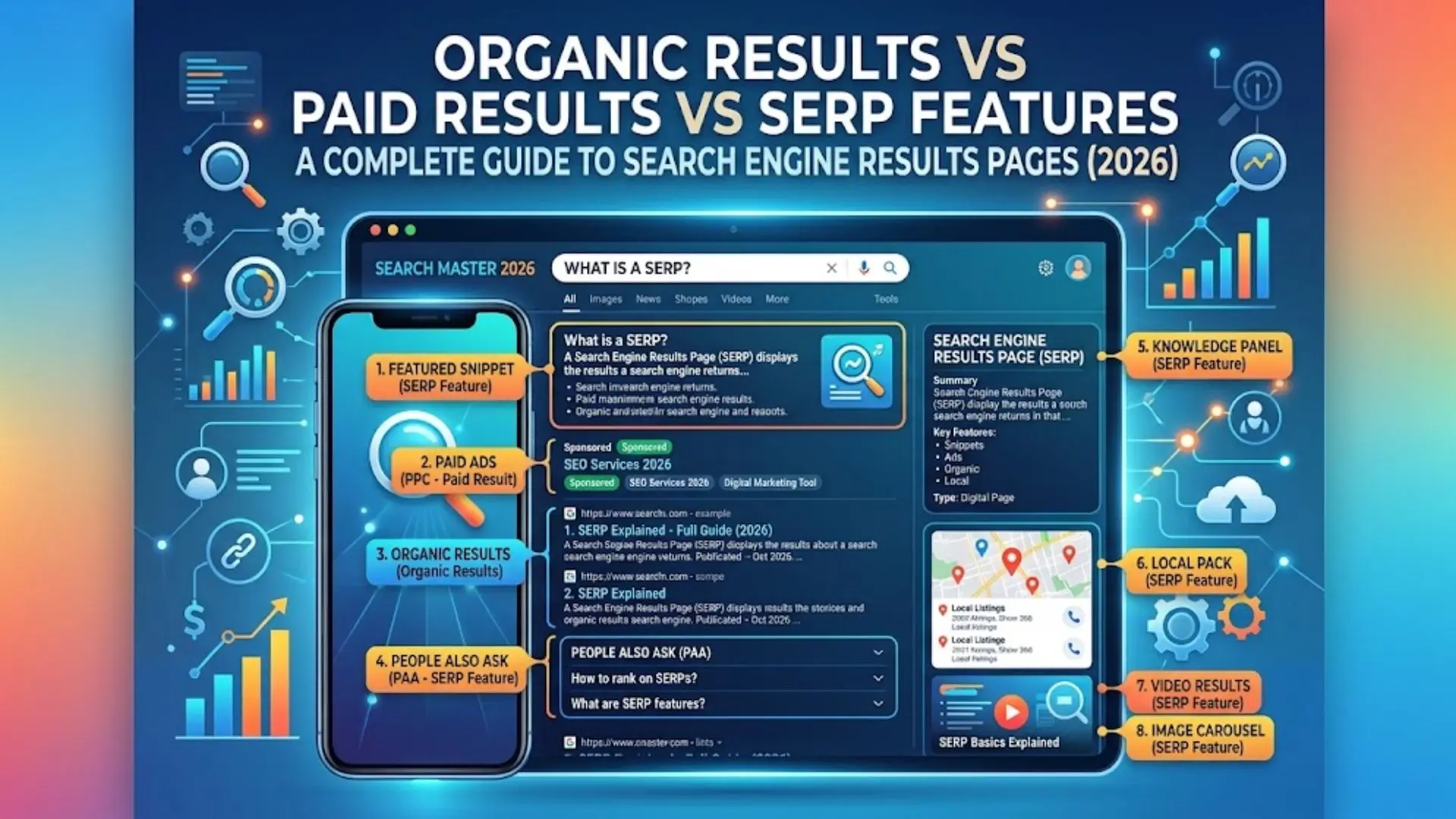
Introduction
You publish content, optimize pages, and build backlinks, but one question remains:
“Is my SEO actually working?”
Many website owners spend months improving their websites without properly measuring their search performance. They create content, target keywords, and make technical improvements, but they do not know whether their pages are moving closer to the top positions on Google.
This is where SERP Tracking becomes important.
SERP Tracking is the process of monitoring where a website ranks in search engine results pages for specific keywords. It helps marketers understand ranking changes, measure SEO progress, identify problems, and discover new opportunities.
In 2026, search results are becoming more competitive because of AI-powered search features, changing algorithms, and increased competition between websites. Businesses need accurate ranking data to make better SEO decisions.
In this guide, you will learn what SERP Tracking is, how it works, why it matters, which metrics you should monitor, and how professionals use ranking data to improve organic growth.
Table of Contents
- What Is SERP Tracking?
- How Does SERP Tracking Work?
- Why Is SERP Tracking Important?
- Benefits of SERP Tracking for Businesses
- Important Metrics To Monitor
- SERP Tracking Tools
- SERP Tracking vs Rank Checking
- Common Mistakes
- Best Practices
- Future of SERP Tracking
- Frequently Asked Questions
What Is SERP Tracking?
SERP Tracking is the process of monitoring website rankings for selected keywords on search engines like Google.
It shows where a webpage appears when users search for specific terms.
For example, a website selling SEO services may track keywords such as:
- SEO services
- SEO agency near me
- technical SEO services
A SERP tracker records whether the website appears at:
- Position 1
- Position 5
- Position 15
- Position 50
This information helps SEO professionals understand whether their optimization efforts are producing results.
SERP Tracking is not only about checking rankings. It also provides insights about:
- Keyword performance
- Competitor movement
- Search visibility
- Ranking opportunities
- Content improvement areas
A simple way to understand it:
SERP Tracking turns SEO from guesswork into a data-based process.
Internal Link Opportunity
Add link here:
Anchor Text:
keyword research guide
Link:/keyword-research-guide
Suggested sentence:
“Before tracking rankings, businesses should identify the right keywords through proper keyword research.”
How Does SERP Tracking Work?
SERP Tracking tools work by automatically checking search engine results for selected keywords and recording ranking changes over time.
The process usually includes several steps.
Selecting Target Keywords
The first step is choosing keywords that match business goals.
A website should not track random keywords. It should focus on terms that can bring relevant visitors.
For example:
An online watch store may track:
- women’s watches online
- luxury watches Pakistan
- minimalist watches
A software company may track:
- CRM software
- business automation tools
- sales management software
The right keywords help businesses understand whether they are reaching their target audience.
Setting Location and Device
Search results change depending on location and device.
Someone searching from Lahore may see different results compared with someone searching from New York.
SERP Tracking allows marketers to monitor:
- Country rankings
- City rankings
- Desktop results
- Mobile results
This is especially important for local SEO campaigns.
Collecting Ranking Data
After keywords are added, tracking tools regularly check search results.
They collect information such as:
- Current position
- Previous position
- Ranking increase
- Ranking decrease
- Competitor positions
This creates a historical record that shows SEO progress.
Analyzing Reports
The final step is understanding the data.
SEO professionals analyze reports to find:
- Pages losing rankings
- Keywords with growth potential
- Competitors gaining visibility
- Content needing updates
This allows teams to make informed decisions.
Why Is SERP Tracking Important for SEO?
SERP Tracking helps businesses understand whether their SEO strategies are working or need improvement.
Without ranking data, marketers often make decisions based on assumptions. They may continue updating pages that are not performing or miss opportunities where small changes could create major improvements.
SERP Tracking provides measurable insights that help businesses improve their online visibility.
1. Measure SEO Performance
One of the biggest advantages of SERP Tracking is measuring SEO progress.
SEO results usually do not happen overnight. A page may take weeks or months to gain visibility.
By monitoring rankings regularly, businesses can understand:
- Which keywords are improving
- Which pages are gaining traffic potential
- Whether content updates are working
- How optimization efforts are performing
For example, if a blog article moves from position 25 to position 8 after optimization, SERP data clearly shows that the changes had a positive impact.
2. Find Keyword Growth Opportunities
SERP Tracking helps identify keywords that already have ranking potential.
Many websites have pages ranking between positions 5 and 20. These pages are close to reaching the first page but may need improvements.
SEO teams can improve these pages by:
- Updating outdated information
- Improving content quality
- Adding internal links
- Improving page experience
- Building relevant backlinks
These opportunities are easier to find when ranking data is available.
Pages ranking on the second page often represent hidden SEO opportunities.
3. Identify Ranking Drops Quickly
Search rankings can change frequently.
A page that ranks well today may lose visibility because of:
- Google algorithm updates
- Competitor improvements
- Technical SEO problems
- Content becoming outdated
- Search intent changes
SERP Tracking allows businesses to notice these drops quickly and take action.
Without monitoring, a website may lose valuable traffic without knowing the reason.
4. Analyze Competitor Performance
SEO is competitive.
Your competitors are also publishing content, improving pages, and building authority.
SERP Tracking helps businesses compare their performance with competitors.
You can discover:
- Which keywords competitors rank for
- Which pages are gaining visibility
- Where competitors have stronger content
- Which opportunities are still available
This information helps create better SEO strategies.
5. Understand Search Intent Changes
Google continuously improves how it understands user searches.
Sometimes a keyword changes meaning over time.
For example:
A keyword that previously showed blog articles may start showing product pages.
SERP Tracking helps identify these changes because marketers can observe:
- New ranking pages
- SERP feature changes
- Competitor content formats
This allows businesses to update their content according to current search behavior.
Benefits of SERP Tracking for Businesses
SERP Tracking is useful for businesses of all sizes because search visibility directly affects online growth.
Better SEO Decision Making
Ranking reports provide clear data instead of opinions.
Businesses can decide:
- Which pages need updates
- Which keywords deserve more focus
- Which SEO activities are producing results
Improved Content Strategy
Content teams can use ranking data to understand what Google prefers.
If certain topics consistently perform well, businesses can create more content around those areas.
Better Reporting for Clients
SEO agencies use SERP Tracking reports to show clients measurable progress.
Instead of saying:
“We improved your SEO.”
They can show:
- Keyword growth
- Ranking improvements
- Visibility increases
- Competitor comparisons
This builds trust.
Increased Organic Traffic Opportunities
Higher rankings usually create more visibility.
According to many SEO studies, pages appearing on the first page of Google receive significantly more clicks than lower-ranking pages.
SERP Tracking helps businesses focus their efforts on reaching valuable positions.
Important SERP Tracking Metrics To Monitor
A professional SERP Tracking strategy should monitor more than just keyword positions.
The following metrics provide deeper SEO insights.
| Metric | What It Shows |
|---|---|
| Keyword Position | Current ranking position of a webpage |
| Ranking Movement | Whether rankings are increasing or decreasing |
| Search Visibility | Overall presence in search results |
| SERP Features | Featured snippets, maps, images, and other results |
| Competitor Rankings | Performance compared with competitors |
| Keyword Distribution | Number of keywords ranking across different positions |
Keyword Position
Keyword position shows where a webpage appears in search results.
Example:
A page ranking:
Position 3 → Strong visibility
Position 15 → Needs improvement
Position 50 → Requires major optimization
Tracking these movements helps SEO teams prioritize work.
Search Visibility
Search visibility measures how often a website appears for tracked keywords.
A website may rank for hundreds of keywords, but visibility depends on:
- Ranking positions
- Search volume
- Keyword importance
SERP Features
Modern search results include more than traditional blue links.
SERP features include:
- Featured snippets
- Local packs
- Image results
- Video results
- AI-generated search summaries
Tracking these features helps businesses understand additional ranking opportunities.
Best SERP Tracking Tools in 2026
Several SEO platforms provide SERP Tracking features.
Google Search Console
Google Search Console is a free tool provided by Google.
It helps website owners monitor:
- Search queries
- Average positions
- Clicks
- Impressions
- Page performance
Official resource:
https://search.google.com/search-console
Ahrefs Rank Tracker
Ahrefs provides keyword monitoring, competitor analysis, and ranking reports.
It is widely used by SEO professionals for backlink and ranking research.
Official website:
https://ahrefs.com
Semrush Position Tracking
Semrush helps marketers monitor:
- Keyword rankings
- Competitor positions
- SERP features
- Local rankings
Official website:
https://www.semrush.com
SE Ranking
SE Ranking provides affordable rank tracking solutions for businesses and agencies.
Official website:
https://seranking.com
Moz Pro Rank Tracking
Moz Pro includes keyword tracking and SEO reporting features.
Official website:
https://moz.com
SERP Tracking vs Rank Checking
SERP Tracking aur rank checking dono SEO mein use hote hain, lekin dono ka purpose different hota hai.
Rank checking usually sirf ek keyword ki current position check karta hai, jabke SERP Tracking ranking data ko time ke sath monitor karta hai aur detailed insights provide karta hai.
| Rank Checking | SERP Tracking |
|---|---|
| Ek waqt ki ranking check karta hai | Long-term ranking changes monitor karta hai |
| Limited information deta hai | Detailed reports provide karta hai |
| Manual checking par depend kar sakta hai | Automated monitoring hoti hai |
| Sirf position show karta hai | Visibility, competitors aur SERP features bhi show karta hai |
For example:
Agar aap sirf check karte hain ke “SEO services” keyword par website kis position par hai, to yeh rank checking hai.
Lekin agar aap dekhte hain:
- Last 6 months ranking trend
- Competitors ki movement
- Keyword growth
- Traffic opportunities
to yeh SERP Tracking hai.
Professional SEO campaigns ke liye continuous tracking zyada valuable hoti hai.
How Agencies Use SERP Tracking Reports
SEO agencies ke liye SERP Tracking sirf ranking report nahi hoti. Yeh strategy banane ka ek important tool hota hai.
Agencies clients ke liye monthly reports mein analyze karti hain:
- Keyword improvements
- Lost rankings
- New ranking keywords
- Competitor performance
- Content opportunities
Example:
Agar ek client ka keyword:
“web development company”
position 18 se position 6 par move karta hai, to agency identify kar sakti hai ke kaun se SEO actions successful rahe.
Yeh information future strategy banane mein help karti hai.
Client Reporting Mein SERP Tracking Ka Role
Clients usually SEO results ko numbers mein samajhna chahte hain.
SERP reports show karti hain:
- Kitne keywords improve hue
- Kitne keywords top 10 mein aaye
- Organic visibility kitni increase hui
- Competitors ke against performance kaisi hai
Clear reporting SEO relationship ko strong banati hai.
How To Create an Effective SERP Tracking Strategy
Sirf tool install karna enough nahi hota. Effective results ke liye proper strategy zaroori hai.
1. Select the Right Keywords
Har keyword track karna zaroori nahi.
Focus karein:
- Business-related keywords
- High-value keywords
- Buyer-intent keywords
- Location-based keywords
Example:
A local dentist ke liye:
Weak keyword:
“teeth”
Better keyword:
“dental clinic in Lahore”
2. Track Different Keyword Groups
Keywords ko categories mein divide karein:
Primary Keywords
Main business terms.
Example:
SEO services
Secondary Keywords
Related search terms.
Example:
SEO audit services
Location Keywords
Local searches.
Example:
SEO agency Karachi
Yeh segmentation analysis ko easy banati hai.
3. Monitor Competitors
Competitor tracking se pata chalta hai:
- Competitors kis keyword par rank kar rahe hain
- Unka content kis topic par strong hai
- Aapke ranking gaps kahan hain
Competitor analysis SEO improvement ka important part hai.
4. Connect Rankings With Traffic
Ranking improve hona achi baat hai, lekin business goal traffic aur conversions hota hai.
Always compare:
Ranking data + Google Analytics + Search Console data
Is se pata chalta hai:
- Kaun se keywords visitors la rahe hain
- Kaun se pages convert kar rahe hain
- Kahan improvement ki zaroorat hai
Common SERP Tracking Mistakes
Many businesses ranking data collect karte hain, lekin uska sahi use nahi karte.
Tracking Too Many Keywords
Bohat zyada keywords track karna confusion create kar sakta hai.
Focus karein un keywords par jo business goals se related hain.
Ignoring Search Intent
Agar keyword ka intent aur content match nahi karte, ranking improve karna mushkil hota hai.
Example:
User “buy laptop online” search kar raha hai.
Agar aap informational blog show kar rahe hain, to ranking difficult hogi.
Only Checking Rankings
Sirf position dekhna enough nahi hai.
SEO mein ye bhi important hain:
- Click-through rate
- Traffic
- Engagement
- Conversions
Ignoring Local Rankings
Local businesses ke liye normal rankings aur local rankings different ho sakti hain.
A restaurant, clinic, ya service business ko city-level SERP Tracking zaroor karni chahiye.
Best Practices For Accurate SERP Tracking
Accurate ranking data ke liye ye practices follow karein:
Track Rankings Regularly
Weekly ya daily tracking business needs ke according useful hoti hai.
Use Consistent Settings
Same:
- Location
- Language
- Device
use karein taake comparison accurate rahe.
Review Ranking Changes
Har ranking change ka reason samajhne ki koshish karein.
Possible reasons:
- Content update
- Algorithm update
- Competitor activity
- Technical problem
Combine Multiple SEO Data Sources
Best decisions ke liye combine karein:
- SERP Tracking
- Google Search Console
- Analytics
- Backlink reports
SERP Tracking and AI Search: The Future of SEO
Search engines rapidly change ho rahe hain.
AI-powered search features ne traditional rankings ko bhi influence karna start kar diya hai.
Future SERP Tracking mein businesses ko sirf blue links monitor nahi karne honge.
They will also need to understand:
- AI search visibility
- Featured answers
- Entity mentions
- Brand presence
- Search experience changes
SEO professionals ko ranking ke sath overall search visibility par focus karna hoga.
Google Search Central ke mutabiq, websites ko helpful, reliable aur user-focused content create karna chahiye.
Authority source:
https://developers.google.com/search
The Role of SERP Tracking in Content Optimization
SERP Tracking content teams ko better decisions lene mein help karta hai.
Agar koi article rank nahi kar raha, to data identify kar sakta hai:
- Missing topics
- Weak sections
- Poor keyword targeting
- Better competitor content
Content improvement process:
- Current ranking check karein
- Top competitors analyze karein
- Content gaps find karein
- Page update karein
- Ranking changes monitor karein
Yeh approach content ko continuously improve karti hai.
How SERP Tracking Helps With Competitor Analysis
SEO mein sirf apni rankings dekhna enough nahi hota. Aapko yeh bhi samajhna hota hai ke competitors kya kar rahe hain.
SERP Tracking competitor analysis ko easy banata hai kyun ke yeh show karta hai:
- Competitors kin keywords par rank kar rahe hain
- Unke kaun se pages top positions mein hain
- Unka content kis topic ko cover kar raha hai
- Kahan aapke liye ranking opportunity available hai
For example:
Agar aap “best SEO agency” keyword track kar rahe hain aur competitor position #2 par hai, to aap analyze kar sakte hain:
- Unke article ki length
- Content structure
- Backlinks
- Internal linking
- User experience
Phir aap apni strategy improve kar sakte hain.
Competitor rankings sirf competition nahi dikhati, balkay improvement opportunities bhi show karti hain.
SERP Tracking for Local SEO
Local businesses ke liye SERP Tracking aur bhi important hota hai.
Aik business ka ranking result location ke hisaab se change ho sakta hai.
Example:
Aik restaurant:
Keyword:
“best restaurant near me”
Different areas mein different rankings show kar sakta hai.
Local SERP Tracking monitor karta hai:
- Google Maps rankings
- Local search results
- City-based keywords
- Location-specific competitors
Local businesses jaise:
- Restaurants
- Clinics
- Salons
- Real estate companies
- Service providers
ke liye location-based tracking zyada valuable hoti hai.
Local SERP Tracking Mein Important Factors
Local rankings improve karne ke liye monitor karein:
- Google Business Profile performance
- Reviews
- Local citations
- Location pages
- Customer engagement
Internal Link Opportunity:
Anchor Text:
Google Business Profile optimization guide
Link:/google-business-profile-guide
SERP Tracking for E-commerce Websites
E-commerce websites ke liye rankings directly sales opportunities create karti hain.
Online stores ko track karna chahiye:
- Product keywords
- Category keywords
- Buying intent keywords
- Competitor products
Example:
A watch store track kar sakta hai:
- Buy women’s watches online
- Luxury watches
- Minimalist watches
SERP data help karta hai identify karne mein:
- Kaun se products visibility gain kar rahe hain
- Kaun se categories improve karni hain
- Kaun se competitors dominate kar rahe hain
E-commerce SEO mein ranking changes ko regularly monitor karna important hai kyun ke competitors frequently:
- Prices change karte hain
- New products add karte hain
- Content update karte hain
SERP Tracking and Google Algorithm Updates
Google regularly search algorithm updates release karta hai.
Kabhi kabhi websites ki rankings suddenly change ho jati hain.
SERP Tracking help karta hai identify karne mein:
- Ranking drops kab start hue
- Kaun se keywords affect hue
- Kaun se pages impact hue
Agar multiple keywords ek saath drop ho jayein, to possible reasons ho sakte hain:
- Algorithm update
- Technical SEO issue
- Content quality problem
SEO teams ranking history ko analyze karke better recovery plans bana sakti hain.
How Often Should You Track SERP Rankings?
SERP Tracking frequency business aur SEO campaign ke size par depend karti hai.
Small Websites
Weekly tracking enough ho sakti hai.
Suitable for:
- Small businesses
- Personal websites
- Local services
Growing Websites
Daily ya few-times-per-week tracking useful hoti hai.
Suitable for:
- E-commerce stores
- Growing blogs
- Marketing websites
Large Websites
Enterprise websites usually daily monitoring karti hain.
Reason:
- Thousands of keywords
- Multiple competitors
- Frequent changes
The important thing is consistency.
How To Choose the Right SERP Tracking Tool
Different businesses ki needs different hoti hain.
Tool choose karte waqt consider karein:
Accuracy
Tool ka ranking data reliable hona chahiye.
Location Tracking
Agar business local hai to city-level tracking important hai.
Competitor Monitoring
Competitor comparison feature valuable hota hai.
Reporting Features
Good reports SEO decisions aur client communication dono mein help karti hain.
Integration Options
Useful integrations:
- Google Search Console
- Google Analytics
- SEO platforms
Frequently Asked Questions About SERP Tracking
What is SERP Tracking?
SERP Tracking is the process of monitoring website rankings for specific keywords in search engine results pages. It helps businesses measure SEO progress and identify ranking opportunities.
Why is SERP Tracking important?
SERP Tracking helps businesses understand whether SEO efforts are improving visibility, generating opportunities, and competing effectively in search results.
How often should I check keyword rankings?
The ideal frequency depends on your website size and goals. Small websites may check weekly, while large websites often monitor rankings daily.
Is SERP Tracking the same as Google Search Console?
No. Google Search Console provides search performance data from Google, while SERP tracking tools focus on monitoring keyword positions and competitor movements.
Can SERP Tracking improve SEO rankings?
SERP Tracking itself does not improve rankings, but it provides data that helps marketers make better SEO decisions.
Which SERP Tracking tool is best?
The best tool depends on your needs. Popular options include Google Search Console, Ahrefs, Semrush, Moz, and SE Ranking.
Conclusion
SERP Tracking is an essential part of modern SEO because it helps businesses understand what is working and where improvements are needed.
By monitoring keyword positions, competitor movements, and search visibility, marketers can create smarter strategies and improve organic performance.
SEO success is not only about creating content. It is about measuring results, learning from data, and continuously improving.
A proper SERP Tracking strategy helps businesses stay competitive and make decisions based on real search performance.
Call To Action
Want to improve your website visibility? Start tracking your important keywords, analyze ranking changes, and build a data-driven SEO strategy today.
Internal Linking Suggestions
- Anchor:
SEO Guide
Suggested Link:/seo-guide
Placement:
Introduction section after explaining SEO performance.
- Anchor:
Keyword Research Guide
Suggested Link:/keyword-research-guide
Placement:
Keyword selection section.
- Anchor:
Technical SEO Checklist
Suggested Link:/technical-seo-checklist
Placement:
Ranking drop section.
- Anchor:
Content Optimization Guide
Suggested Link:/content-optimization-guide
Placement:
Content improvement section.
External Authority Links
- Google Search Central
Anchor:
Google Search documentation
Link:
https://developers.google.com/search
- Google Search Console
Anchor:
Google Search Console
